

HVAC Maintenance Guide: SEER Ratings, Heat Pumps, Split Systems & More | San Antonio
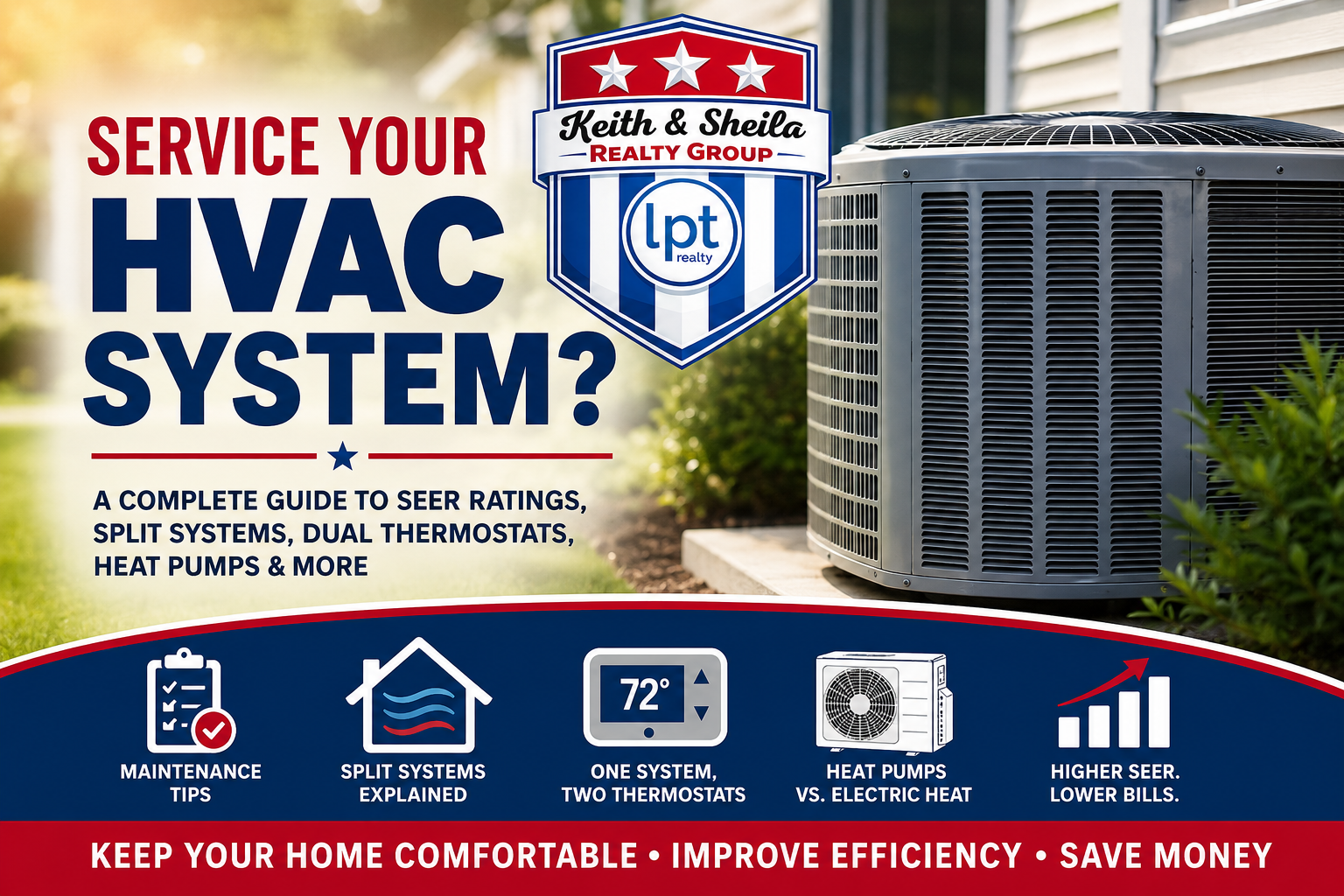
Why You Should Service Your HVAC System Every Year: Understanding SEER Ratings, Split Systems, Heat Pumps & More
Your heating and cooling system is one of the most expensive mechanical systems in your home. In South and Central Texas, where air conditioners may run eight or more months each year, routine maintenance can dramatically improve efficiency, lower utility bills, extend equipment life, and reduce the likelihood of expensive breakdowns.
Whether you're buying a home, selling one, or maintaining your current property, understanding how your HVAC system works helps you make smarter decisions.
Why Annual HVAC Service Matters
Professional HVAC maintenance typically includes:
- Cleaning condenser coils
- Checking refrigerant levels
- Inspecting electrical components
- Testing capacitors and contactors
- Cleaning condensate drain lines
- Checking blower motor performance
- Inspecting ductwork
- Replacing or cleaning air filters
- Calibrating thermostats
- Testing overall system efficiency
Routine maintenance helps:
- Reduce energy consumption
- Improve cooling performance
- Lower utility bills
- Prevent costly repairs
- Increase system lifespan
- Improve indoor air quality
- Maintain manufacturer warranties
Understanding SEER Ratings
SEER stands for Seasonal Energy Efficiency Ratio. It measures how efficiently an air conditioner cools your home throughout an average cooling season.
| SEER Rating | Efficiency | Typical Age |
|---|---|---|
| 10-13 | Older systems | 15-25 years old |
| 14-16 | Current standard efficiency | Common replacement systems |
| 17-20 | High efficiency | Lower utility costs |
| 20+ | Premium efficiency | Variable-speed equipment |
Modern systems often use the updated SEER2 testing standard, which reflects more realistic operating conditions. Higher SEER2 ratings generally indicate greater efficiency, though installation quality and proper sizing are just as important as the rating itself.
While higher SEER systems cost more initially, homeowners who use their air conditioning heavily often recover part of the investment through lower electric bills.
Split Systems Explained
The most common HVAC system in Texas is called a split system.
It consists of:
- Outdoor condenser unit
- Indoor evaporator coil
- Indoor furnace or air handler
- Ductwork throughout the home
The outdoor unit removes heat while the indoor equipment distributes conditioned air throughout the house.
One HVAC System with Two Thermostats
Many two-story homes have two thermostats but only one HVAC unit.
How does that work?
The system uses electronic dampers inside the ductwork to create different "zones."
- Upstairs thermostat controls upstairs dampers
- Downstairs thermostat controls downstairs dampers
- One HVAC unit serves both areas
This is called a zoned HVAC system.
Advantages include:
- Better comfort
- Reduced hot and cold spots
- Lower energy usage
- Independent temperature control
However, zoning systems contain additional components that require occasional maintenance.
Two Separate HVAC Systems
Larger homes often have two completely independent HVAC systems.
Typically:
- One serves the first floor
- One serves the second floor
Advantages include:
- If one system fails, the other still operates.
- More precise temperature control.
- Less strain on each unit.
- Often longer equipment life.
Disadvantages include:
- Higher replacement costs.
- Twice the maintenance.
- More equipment to service.
Heat Pump vs. Electric Furnace
Heat Pump
A heat pump moves heat instead of creating it.
In summer:
- Acts like an air conditioner.
In winter:
- Reverses operation and pulls heat from the outside air.
Benefits:
- Lower operating costs
- Excellent for Texas winters
- Energy efficient
- One system provides heating and cooling
Electric Furnace (Electric Resistance Heat)
An electric furnace creates heat using electric heating elements similar to a toaster.
Advantages:
- Simpler design
- Lower purchase price
- Reliable operation
Disadvantages:
- Higher electric bills during cold weather
- Less efficient than most heat pumps
Because South Texas experiences relatively mild winters, many homeowners save money with modern heat pump systems.
Should You Replace an Older HVAC System?
You may want to consider replacement if:
- Your system is over 15 years old.
- Repairs are becoming frequent.
- Your utility bills continue increasing.
- Your home has uneven temperatures.
- Your system still uses R-22 refrigerant.
- Your equipment has a very low SEER rating.
Today's systems are significantly quieter and more energy efficient than equipment installed 15–20 years ago.
Simple Maintenance Tips Every Homeowner Should Follow
- Replace filters every 1–3 months.
- Keep grass and shrubs at least 2 feet away from the outdoor unit.
- Wash condenser coils annually.
- Flush condensate drain lines periodically.
- Schedule professional maintenance every spring.
- Have the heating system inspected each fall.
- Keep vents open and unobstructed.
Why HVAC Matters When Buying a Home
As experienced real estate professionals and former home inspectors, we encourage buyers to look beyond cosmetics when evaluating a home.
Ask questions such as:
- How old is the HVAC system?
- Has it been professionally maintained?
- What SEER rating does it have?
- Is it a heat pump or electric furnace?
- Are maintenance records available?
- Has the system required major repairs?
A quality home inspection combined with a professional HVAC evaluation can help buyers avoid unexpected expenses after closing.
Final Thoughts
Your HVAC system works harder than almost any other component of your home. Regular maintenance, understanding your equipment, and making informed replacement decisions can improve comfort, reduce energy costs, and protect one of your home's largest investments.
If you're buying or selling a home in the Greater San Antonio area, we're happy to help you understand the condition of a home's major systems so you can make confident real estate decisions.
Helpful Resources
Frequently Asked Questions
How often should I service my HVAC system?
Most manufacturers recommend professional maintenance once each year, with many HVAC companies suggesting spring service for cooling systems and fall service for heating systems.
What SEER rating should I buy?
For most Texas homeowners, systems rated between 16 and 18 SEER2 provide an excellent balance between efficiency and purchase cost.
Are heat pumps good for Texas?
Yes. Because winters are generally mild, heat pumps are often one of the most energy-efficient heating options available.
Does changing my air filter really help?
Absolutely. A clean filter improves airflow, reduces energy consumption, and helps extend the life of your HVAC equipment.
How long should an HVAC system last?
With proper maintenance, many central HVAC systems last 15–20 years, though lifespan depends on climate, usage, installation quality, and routine service.
Categories
Recent Posts










"Words cannot express our gratitude and thankfulness that Keith provided us when buying our home. Being a military family and not being able to physically be there is beyond challenging buying a house unseen. He made this whole process so pleasant and easy, always easing our minds because he had our complete best interests in his hands. He took the time to send videos, pictures, and did several walk-through of the home to make us feel like we were there. You can easily tell Keith has years of experience , always answering questions and helping us every step of the way! He was extremely helpful in guiding us through the process of buying our home, and making sure that everything was taken care of promptly and correctly. He has been nothing but extremely responsive and excellent since the first phone call! Keith is incredibly knowledgeable, a go-getter, and super professional. We truly sat in passenger seat and let Keith do the driving. He went above and beyond to find the perfect home for us. There's not another realtor out there that could've provided us with the ease and comfort knowing we were making all the right decisions! Keith and Sheila have our highest recommendation, and we wouldn’t ever want to work with any other agent. We will refer our friends and family to Keith and Sheila Realty again and again!" Nicole Olson - 2024